Understanding your Bosch Ascenta dishwasher begins with the manual; it’s a vital resource for safety, operation, and maximizing appliance performance.
Accessing the manual, either physically or as a PDF via bosch-home.com, unlocks essential details about your specific model (E-Nr).
Proper use and care, guided by the manual, ensures longevity and optimal cleaning results from your Ascenta dishwasher.
Overview of the Ascenta Series
The Bosch Ascenta series represents a balance of reliable performance and affordability within the Bosch dishwasher lineup. These models, detailed in the instruction manual, offer essential cleaning cycles and features for everyday use.
Ascenta dishwashers are known for their quiet operation, often featuring Bosch’s EcoSilence motor technology. The series includes various models, each with specific dimensions and capacities, as outlined in the technical specifications section of the manual.
Users can expect efficient water consumption and energy-saving capabilities, further explained within the provided documentation.
Importance of the Instruction Manual
The Bosch Ascenta instruction manual is paramount for safe and effective operation. It details crucial safety warnings, preventing potential injury or appliance damage. Understanding wash programs, detergent usage, and maintenance procedures—all covered within—optimizes cleaning performance.
Furthermore, the manual assists in troubleshooting common issues and accessing warranty information; Locating your model number (E-Nr) within allows access to specific online resources and PDF downloads for convenient reference.
Ignoring the manual risks improper use and diminished lifespan.

Safety Instructions
Prioritize safety by carefully reviewing the manual’s warnings regarding installation, operation, and maintenance. Avoid risks of electrical shock, water damage, and improper use.
General Safety Warnings
Read all instructions before operating the dishwasher to prevent potential hazards. Ensure proper grounding to minimize shock risk. Never allow children to operate or play near the appliance.
Disconnect power before maintenance or cleaning. Do not modify the dishwasher or use unauthorized parts. Avoid using harsh chemicals or abrasive cleaners. Follow all local codes and regulations during installation.
Exercise caution when opening the door during or after a wash cycle due to escaping steam. Always supervise if assistance is needed from individuals with reduced physical, sensory, or mental capabilities.
Specific Safety Precautions for Ascenta Models
Ascenta dishwashers utilize heated drying; exercise caution as surfaces become hot during and immediately after operation. Avoid touching heating elements. Ensure spray arms rotate freely before each cycle to prevent damage.
Properly load dishes to avoid obstruction of spray arms. Never open the door mid-cycle unless absolutely necessary, as hot water may spill. Inspect door seals regularly for damage.
Do not store cleaning products or flammable materials near the dishwasher. Refer to the full manual for detailed safety guidelines specific to your Ascenta model.
Getting Started
Begin by locating your dishwasher’s model number (E-Nr) on the rating plate. Access the comprehensive online manual at bosch-home.com for detailed guidance.
Utilize the online resources for quick answers and PDF downloads to start enjoying your Bosch Ascenta dishwasher.
Locating the Model Number (E-Nr)
Identifying your Bosch Ascenta dishwasher’s model number, designated as E-Nr, is crucial for accessing the correct documentation and support. This unique identifier is typically found on the appliance’s rating plate.
The rating plate is usually located inside the dishwasher door, around the frame, or on the side of the unit. Carefully inspect these areas to locate the sticker containing the E-Nr.
Having this number readily available streamlines the process of downloading the appropriate user manual or contacting Bosch customer support for assistance.
Accessing the Online Manual (bosch-home.com)
Bosch provides convenient access to Ascenta dishwasher manuals through their official website, bosch-home.com. Navigate to the support or owner’s manual section and enter your appliance’s Model Number (E-Nr) to find the correct documentation.
Alternatively, the mybosch platform offers personalized support and manual access. You can view and download the manual directly as a PDF, eliminating the need for a physical copy.
This online resource ensures you always have the latest information at your fingertips.
Understanding Your Dishwasher
Familiarize yourself with key components like racks, spray arms, and the filter. The control panel dictates wash cycles; the manual explains each function clearly.
Key Components and Features
The Bosch Ascenta dishwasher boasts adjustable racks designed for versatile loading, accommodating various dish sizes and cookware. Its powerful spray arms ensure comprehensive cleaning, reaching all surfaces effectively.
A self-cleaning filter system minimizes maintenance, while the EcoSilence motor delivers quiet operation. Features like the sanitize option and various wash cycles cater to diverse cleaning needs, detailed within the instruction manual.
Understanding these components, as outlined in your manual, maximizes the dishwasher’s performance and lifespan.
Control Panel Explanation
The Ascenta’s control panel features intuitive buttons for selecting wash cycles, adjusting settings, and initiating operation. Key functions include options for delayed start, sanitize, and half load.
Indicator lights display cycle progress and any error messages, referencing the manual for troubleshooting. The manual provides a detailed breakdown of each button’s function and available options.
Familiarizing yourself with the control panel, as described in the manual, ensures efficient and customized dishwashing.
Loading the Dishwasher
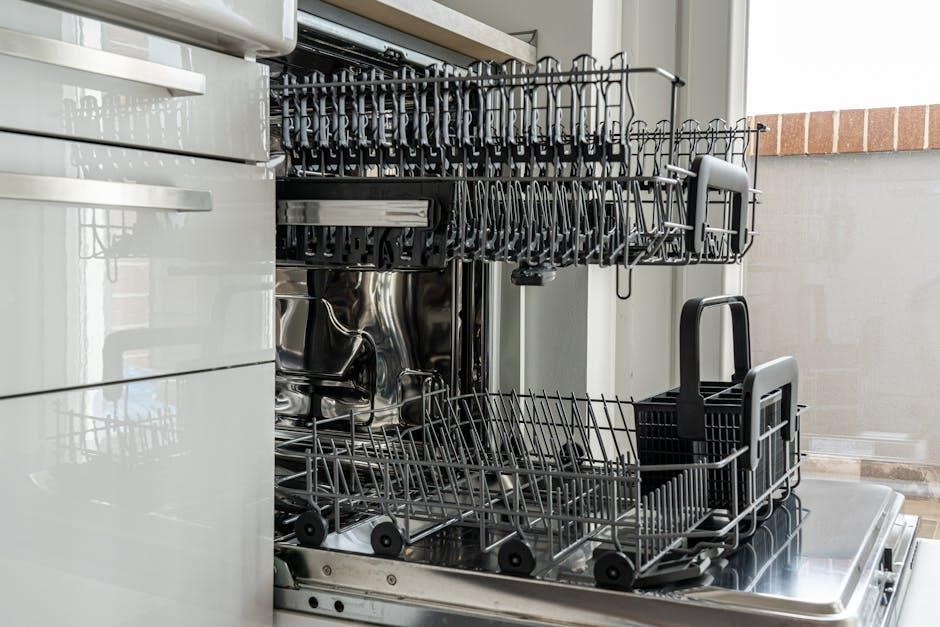
Optimal loading, detailed in the manual, maximizes cleaning performance. Proper rack configuration and recommended patterns prevent rewashing and ensure sparkling results.
Avoid overcrowding and ensure spray arms aren’t blocked for efficient water circulation.
Proper Rack Configuration
The Ascenta dishwasher’s racks are designed for specific item types; consult your manual for detailed guidance. Adjustable tines in the lower rack accommodate larger pots and pans, while the upper rack is ideal for glasses and smaller items.
Ensure items don’t obstruct the spray arms’ rotation. Fold-down tines offer flexibility, and proper spacing prevents nesting, allowing water to reach all surfaces effectively. Refer to diagrams in the manual for optimal arrangement.
Recommended Loading Patterns
Your Bosch Ascenta manual illustrates ideal loading patterns for maximizing cleaning performance. Face soiled surfaces towards the spray arms, avoiding overcrowding. Place larger items along the sides and back, allowing water circulation.
Secure lightweight items to prevent movement during the wash cycle. Avoid blocking detergent dispensers or the spray arm base. Following these guidelines, detailed in the manual, ensures thorough cleaning and prevents re-washing.
Detergent and Rinse Aid
The manual details appropriate detergents for your Ascenta, alongside rinse aid usage. Proper amounts ensure sparkling dishes and prevent residue buildup within the dishwasher.
Types of Detergent to Use
The Bosch Ascenta manual recommends using only dishwasher detergent specifically formulated for automatic dishwashers. Powder, gel, or tablets are acceptable, but avoid hand dish soap as it creates excessive suds.
Always follow the detergent manufacturer’s dosage instructions, adjusting based on water hardness. Using too much detergent can leave residue, while too little may result in inadequate cleaning. The manual may offer guidance on adjusting detergent amounts.
Rinse Aid Usage and Refilling
The Bosch Ascenta manual highlights the importance of rinse aid for spotless dishes and reduced water spots. Refill the rinse aid dispenser when the indicator light illuminates, typically located inside the dishwasher door.
Adjust the rinse aid setting according to water hardness; higher hardness requires a higher setting. Consult the manual for specific adjustment instructions to achieve optimal drying performance and prevent filming on glassware.
Wash Programs
The manual details available wash cycles – Auto, Normal, Delicate, Quick, and more – for varied soil levels and dish types.
Selecting the correct program, guided by the manual’s program selection guide, optimizes cleaning and conserves resources.
Overview of Available Wash Cycles
Bosch Ascenta dishwashers offer a range of wash cycles detailed in the manual, catering to diverse cleaning needs. Auto adjusts settings for optimal results, while Normal handles everyday loads.
Delicate gently cleans fragile items, Quick provides a fast wash for lightly soiled dishes, and Eco maximizes energy efficiency. Rinse and Sanitize options offer additional functionality. The manual explains each cycle’s duration, water usage, and recommended load types.
Program Selection Guide
The Bosch Ascenta manual provides a clear program selection guide to simplify operation. For heavily soiled pots and pans, choose Auto or Normal. Delicate glassware benefits from the Delicate cycle.
Quick wash is ideal for lightly soiled items, while Eco minimizes energy consumption. Refer to the manual’s chart for specific load types and recommended settings, ensuring optimal cleaning performance every time.
Care and Maintenance
Regular cleaning, as detailed in the manual, maintains your Ascenta’s performance. Filter cleaning and interior wiping prevent buildup and ensure hygienic operation.
Following the manual’s guidance extends the dishwasher’s life and preserves its cleaning efficiency.
Cleaning the Interior
The Ascenta dishwasher’s interior benefits from regular cleaning, as outlined in your manual. Wipe down the door gaskets with a damp cloth to remove food particles and maintain a tight seal.
Periodically, use a dishwasher cleaner to remove limescale and residue buildup. Avoid abrasive cleaners, as they can damage the stainless steel interior. Refer to the manual for recommended cleaning frequencies and product suggestions to ensure optimal performance and hygiene.
Filter Cleaning Procedures
Your Bosch Ascenta manual details crucial filter cleaning steps. Locate the cylindrical filter at the bottom of the dishwasher and twist to unlock. Remove and rinse thoroughly under running water, removing any food debris.
Inspect the filter for blockages and clean with a soft brush if needed. Reinstall the filter, ensuring it’s securely locked. Regular cleaning, as per the manual, prevents clogs and maintains optimal wash performance.
Troubleshooting Common Issues
The Ascenta manual offers self-help solutions and explains error codes. Consult it before seeking service; many problems have simple fixes outlined within.
Addressing Error Codes
Bosch Ascenta dishwashers utilize error codes to signal malfunctions, detailed within your instruction manual. These codes pinpoint the issue – from water supply problems to drainage concerns.
The manual provides a comprehensive list, explaining each code’s meaning and offering suggested remedies. Often, simple steps like resetting the dishwasher or checking connections resolve the problem.
Ignoring error codes can lead to further damage; the manual empowers you to diagnose and potentially fix issues independently before contacting support.
Self-Help Solutions
Before contacting customer support, the Bosch Ascenta manual encourages self-diagnosis for common issues. It details troubleshooting steps for problems like poor cleaning, unusual noises, or leaks.
Solutions range from verifying proper loading techniques and detergent usage to cleaning filters and checking spray arms. The manual also guides you through basic resets and cycle adjustments.
Utilizing these self-help options can save time and expense, empowering you to maintain your dishwasher’s performance effectively.

Water Softening System
The manual explains how to adjust the Ascenta’s water softening settings based on your local water hardness levels for optimal cleaning.
Proper adjustment prevents limescale buildup, ensuring efficient operation and extending the dishwasher’s lifespan.
Understanding Water Hardness
The Bosch Ascenta manual details how water hardness impacts dishwasher performance; hard water contains minerals like calcium and magnesium, causing spots and film.
It explains how to determine your water hardness using a test strip or contacting your local water utility.
The manual provides a chart correlating hardness levels (degrees dH or ppm) to the appropriate softener setting on your dishwasher, ensuring optimal detergent effectiveness and spotless dishes.
Adjusting Water Softening Settings
The Bosch Ascenta manual guides you through adjusting the water softening system via the control panel.
It details accessing the settings menu and navigating to the water hardness level.
Following the chart in the manual, select the setting corresponding to your measured water hardness. Proper adjustment optimizes detergent use, prevents scaling, and ensures sparkling clean dishes, maximizing your dishwasher’s efficiency.
Energy Efficiency Tips
The manual recommends utilizing EcoSilence motor technology and optimizing wash cycles.
Selecting appropriate programs and fully loading the dishwasher conserves water and energy, reducing environmental impact and costs.
Optimizing Wash Cycles for Energy Savings
The Bosch Ascenta manual details how to maximize energy efficiency. Utilize the ‘Eco’ cycle for lightly soiled dishes; it uses less water and electricity.
Avoid pre-rinsing dishes excessively, as modern detergents are designed to handle food residue. Ensure full loads whenever possible, but avoid overcrowding, which hinders cleaning performance.
Consider using the delay start function to run the dishwasher during off-peak energy hours, potentially lowering costs. Refer to the manual for specific program details.
EcoSilence Motor Technology
The Bosch Ascenta dishwasher features EcoSilence motor technology, highlighted in the manual, for exceptionally quiet operation and energy efficiency.
This innovative motor reduces friction and vibration, resulting in lower energy consumption and a significantly quieter wash cycle. The manual explains how this technology contributes to reduced noise levels.
Enjoy peaceful operation without compromising cleaning performance, a key benefit detailed within the Ascenta’s user guide.
Technical Specifications
The manual details the Ascenta’s dimensions, capacity, and water consumption. Find precise measurements for installation and understand the appliance’s resource usage.
Refer to these specifications for proper planning and efficient operation of your Bosch dishwasher.
Dimensions and Capacity
The Bosch Ascenta dishwasher’s manual provides crucial dimensional data for seamless integration into your kitchen space. Detailed height, width, and depth measurements are listed, ensuring proper fit.
Capacity is specified in place setting numbers, indicating how many dishes the appliance can effectively clean per cycle. Consult the manual to determine the exact capacity of your specific Ascenta model, optimizing loading for best results.
Water Consumption Details
The Bosch Ascenta dishwasher’s manual outlines water usage per wash cycle, varying by program selection. Understanding these details aids in responsible water consumption and cost savings.
Information regarding gallons per cycle is clearly stated, allowing users to choose eco-friendly options. Refer to the manual for specific figures related to each program, promoting efficient appliance operation and environmental awareness.
Warranty Information
The manual details Bosch’s Ascenta dishwasher warranty coverage, outlining parts and labor protection. Contact Bosch customer support, as specified in the manual, for claims.
Coverage Details
The Bosch Ascenta dishwasher warranty, as detailed in your manual, typically covers defects in materials and workmanship for a specified period. This generally includes parts and labor for repairs performed by authorized Bosch service technicians.
However, the manual clarifies exclusions like improper installation, misuse, or damage from external factors. Carefully review the warranty terms within the manual to understand the scope of coverage and any limitations that may apply to your specific Ascenta model.
Contacting Bosch Customer Support
For assistance beyond the manual, Bosch customer support is readily available. The manual itself often provides a dedicated phone number and website address (bosch-home.com) for inquiries.
Online resources, including FAQs and live chat, may offer quick solutions. When contacting support, have your Ascenta’s model number (E-Nr) handy, as detailed in the manual, to expedite the process and ensure efficient assistance.
Downloading the PDF Manual
Access your Bosch Ascenta dishwasher’s PDF manual easily at bosch-home.com. Search using your model number (E-Nr) for convenient offline viewing and saving.
Finding the PDF Version Online
To locate the PDF version of your Bosch Ascenta dishwasher’s manual, navigate to the official Bosch website: bosch-home.com. Enter the first few characters of your appliance’s model number (E-Nr) into the search bar.
Alternatively, utilize the camera icon (on mobile) to photograph the rating plate for automatic model number detection. The manual will then be available for download and viewing.
Saving and Accessing the PDF
Once downloaded, save the Bosch Ascenta dishwasher manual PDF to a readily accessible location on your computer or mobile device. Ensure the file is named descriptively for easy identification.
To view, simply open the PDF with a compatible reader like Adobe Acrobat. This allows offline access to crucial information regarding operation, maintenance, and troubleshooting.